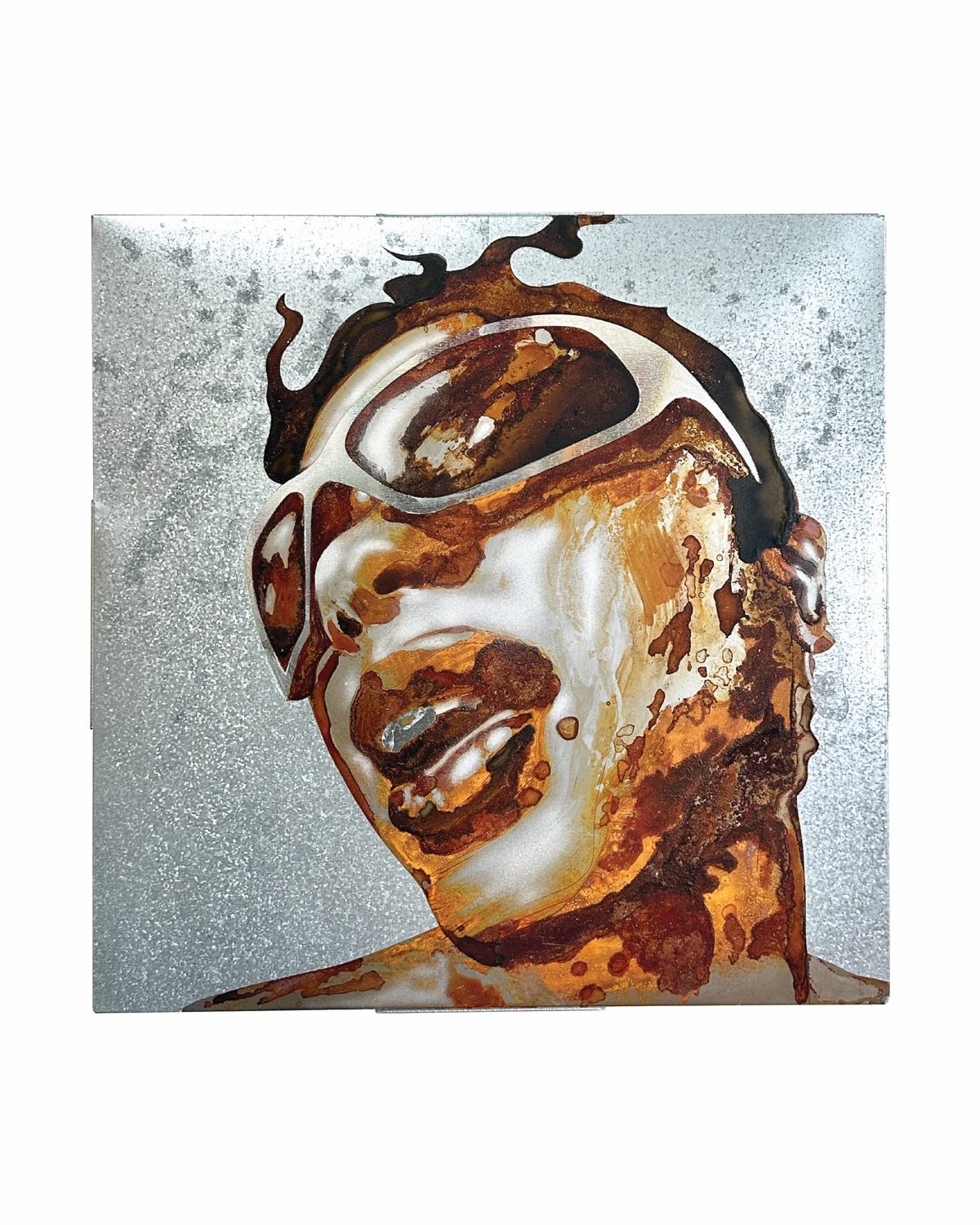
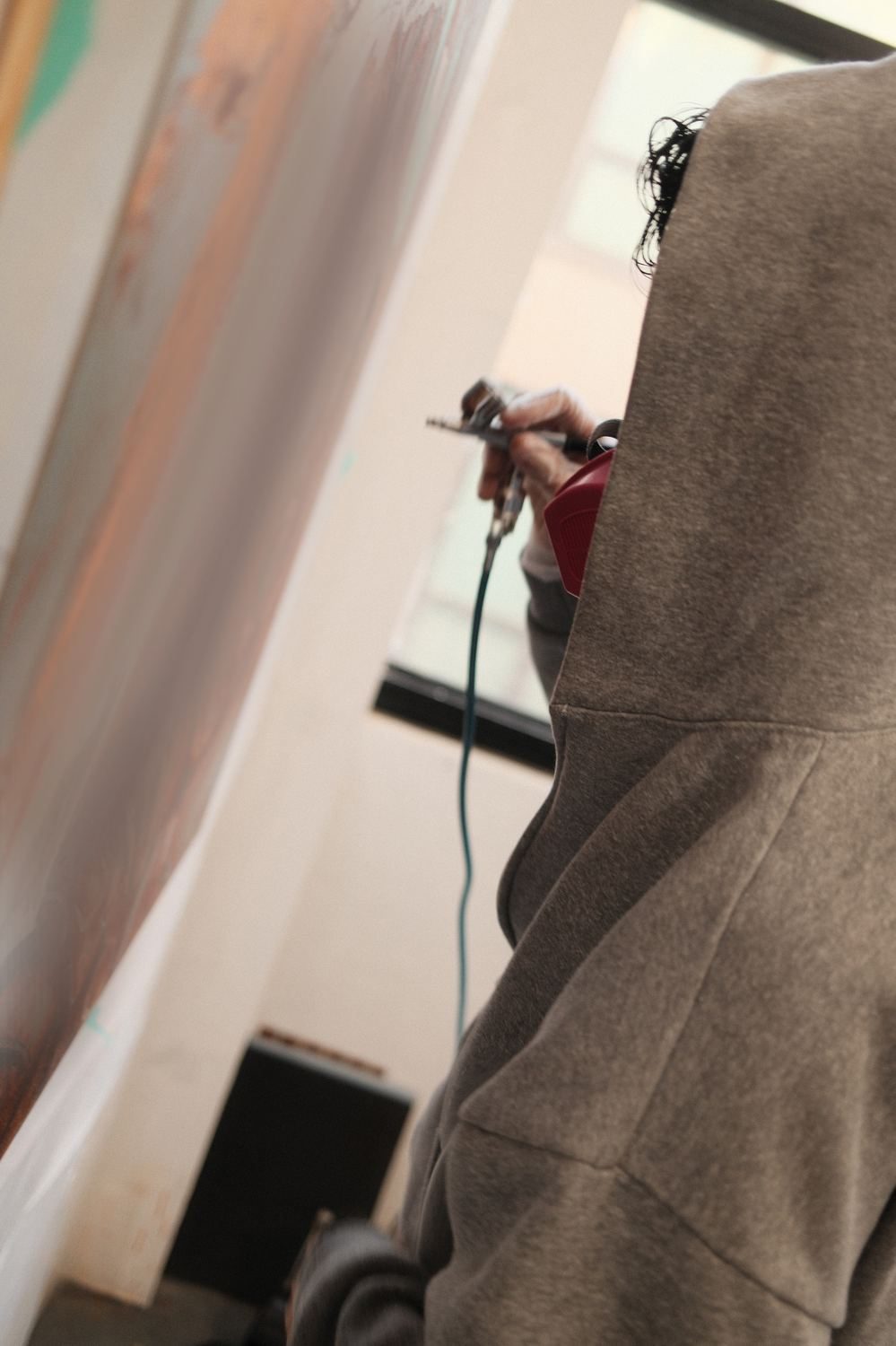
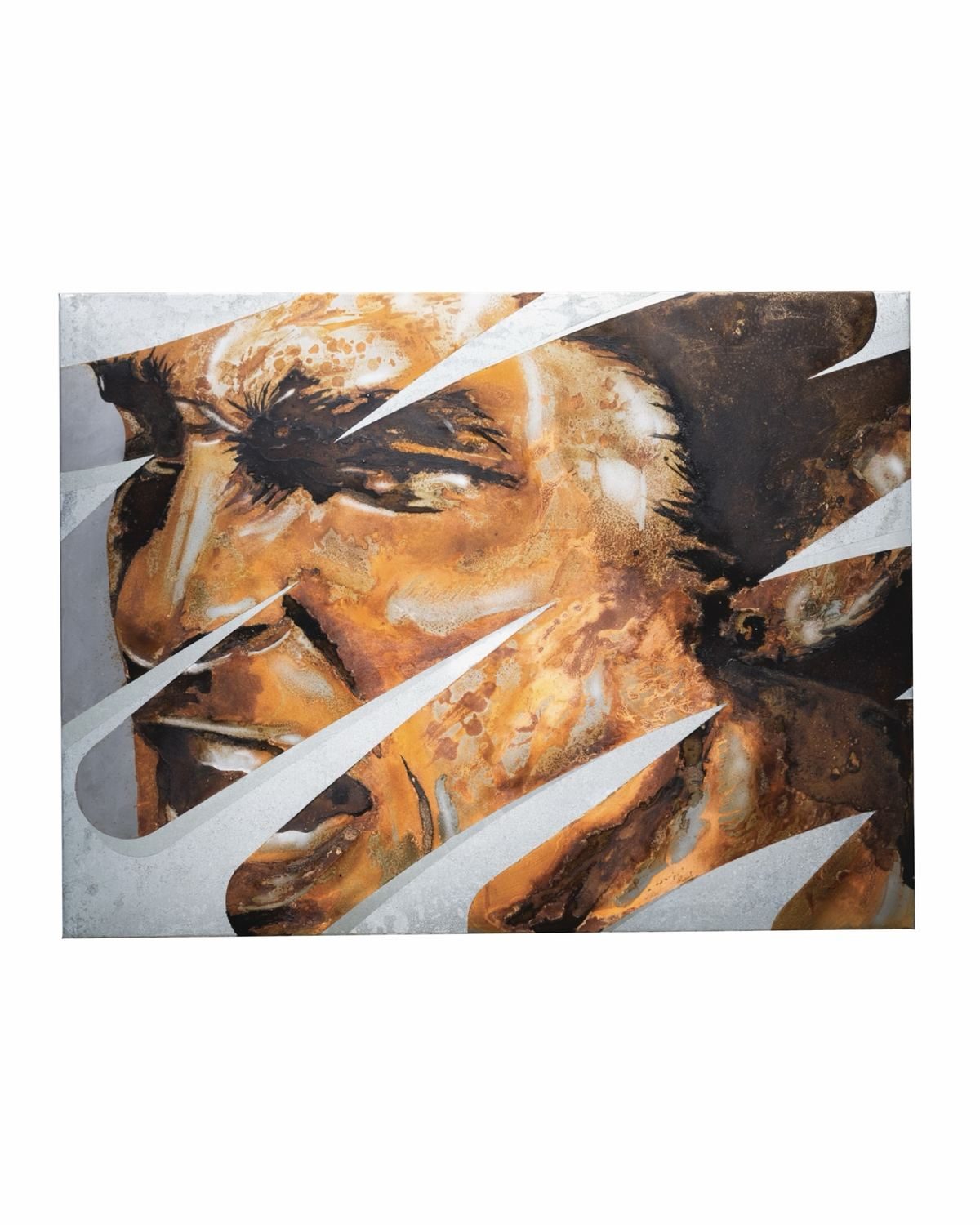
鉄が錆びていく、その避けられない時間の流れを絵筆に変えた人がいる。ニューヨークを拠点に活動するアーティスト、鈴木勁(すずき・つよし)。錆の色だけで画面を描くという、本人いわく「探しても誰もやっていなかった」技法で、時間や記憶をテーマに作品を発表し続けている。
今年7月、東京・蔦屋書店の展示で偶然出会った一枚の作品に、Mirror’s 編集部は思わず足を止めた。作者は28歳。アートに向き合い始めたのは、渡米して大学に入ってからだという。なぜ錆だったのか。ニューヨークで何を見たのか。そして、刻一刻と進む時間と競うように描く、その制作の裏側とは。彼に話を聞かせてもらった。
錆や金属の表現が印象的です。どうやってあの技法に行き着いたんですか?Your use of rust and metal is striking. How did you arrive at this technique?
大学4年生の頃に見つけました。きっかけは本当に小さな課題で、「自分の素材で何かを作る」というもの。枝を拾ってきて地面に並べ、文字を作る人もいるような、すごく自由な課題でした。どうしようかなと調べていたときに、YouTubeでヴィンテージショップのオーナーのような人が、車や門など、何でも錆びさせてヴィンテージ風にしてしまう動画を見たんです。
「錆ってこんなにコントロールできるんだ」「こんな速さで作れるんだ」という驚きがまずあって。でも調べてみると、このテクニックで何かを「描く」人が全然いなかった。その瞬間に、ここにはめちゃくちゃチャンスがあると思いました。
I found it in my senior year of college. It started with a really small assignment: “make something with your own material.” It was very open—some people picked up branches, laid them on the ground and spelled out letters. While I was looking into what to do, I saw a YouTube video of someone who seemed to be a vintage shop owner, rusting everything—cars, gates, anything—to give it a vintage look.
First I was amazed: “You can control rust this much?” “You can make something this fast?” But when I looked into it, nobody was using this technique to actually “draw” anything. In that moment I thought there was a huge opportunity here.
錆を使う作家自体はいたんですね。So there were already artists working with rust.
鉄板を雨ざらしにして、その表情を見せるような、抽象的でオーガニックな作品にする人はいました。でも、錆をコントロールして、錆の色で絵を描く人は、自分が探した範囲では見つからなかった。たぶん今もまだ出会っていないですね。ここをやろう、という閃きでした。
There were people who left iron plates out in the rain and presented the resulting surfaces as abstract, organic works. But I couldn't find anyone who controlled rust and painted pictures in rust colors—not within the range I searched. I probably still haven't met anyone like that. It was a flash of inspiration: this is what I'll do.
アートを始めたのは大学からだそうですね。I hear you started making art in college.
はい。アメリカに来るまでは、アートとはまったく接点のない生活でした。大学は専門の美大ではなく、普通の4年制大学のアート学部です。そこで平面も立体も、とりあえず全部やってみようと思って。始めたらすごくハマって、これが仕事になったらいいなと思うようになりました。
ただ、小さい頃からピアノを習っている人と同じように、子どもの頃から絵を描いてきた人には、描写力や基礎力では全然かなわない。その路線で勝負するんじゃないと途中で気づいて、何かを見つけようとしていたんです。錆に出会ったのは、ちょうどそのタイミングでした。
Yes. Until I came to the U.S., I lived a life with no connection to art. I didn't go to a specialized art school, but to the art department of a regular four-year university. I decided to try everything there, both flat work and sculpture. Once I started, I got completely hooked and began to hope this could become my job.
But just like someone who has played piano since childhood, people who have drawn since they were kids are far ahead of me in rendering skill and fundamentals. Partway through I realized I shouldn't compete on that track, and I was trying to find something of my own. I met rust right at that moment.
「人と同じことをしない」という感覚は、昔から?Has this sense of “not doing what everyone else does” always been with you?
そうですね。絵は描いていなかったけど、高校生の頃から小さなアクセサリーを作ったり、服に刺繍したりするのは好きでした。流行りのファッションよりも、自分で作ったちょっとダサいアクセサリーをつけているほうが好きだった。絶対に被らないじゃないですか。
すでにある競争に入っていくより、一歩抜け出して、自分しかやっていないところで勝負する。そういうのがずっと好きなんです。オリジナリティは、今もいちばん大事にしているところです。
I think so. I wasn't drawing, but since high school I liked making small accessories and embroidering clothes. I preferred wearing slightly goofy accessories I'd made myself over trendy fashion. They'd never overlap with anyone else's.
Rather than entering a competition that already exists, I like stepping out of it and competing in a place only I occupy. I've always liked that. Originality is still what I value most.
現在はニューヨークが拠点です。もともと縁があったんですか?You're now based in New York. Did you have a connection to the city?
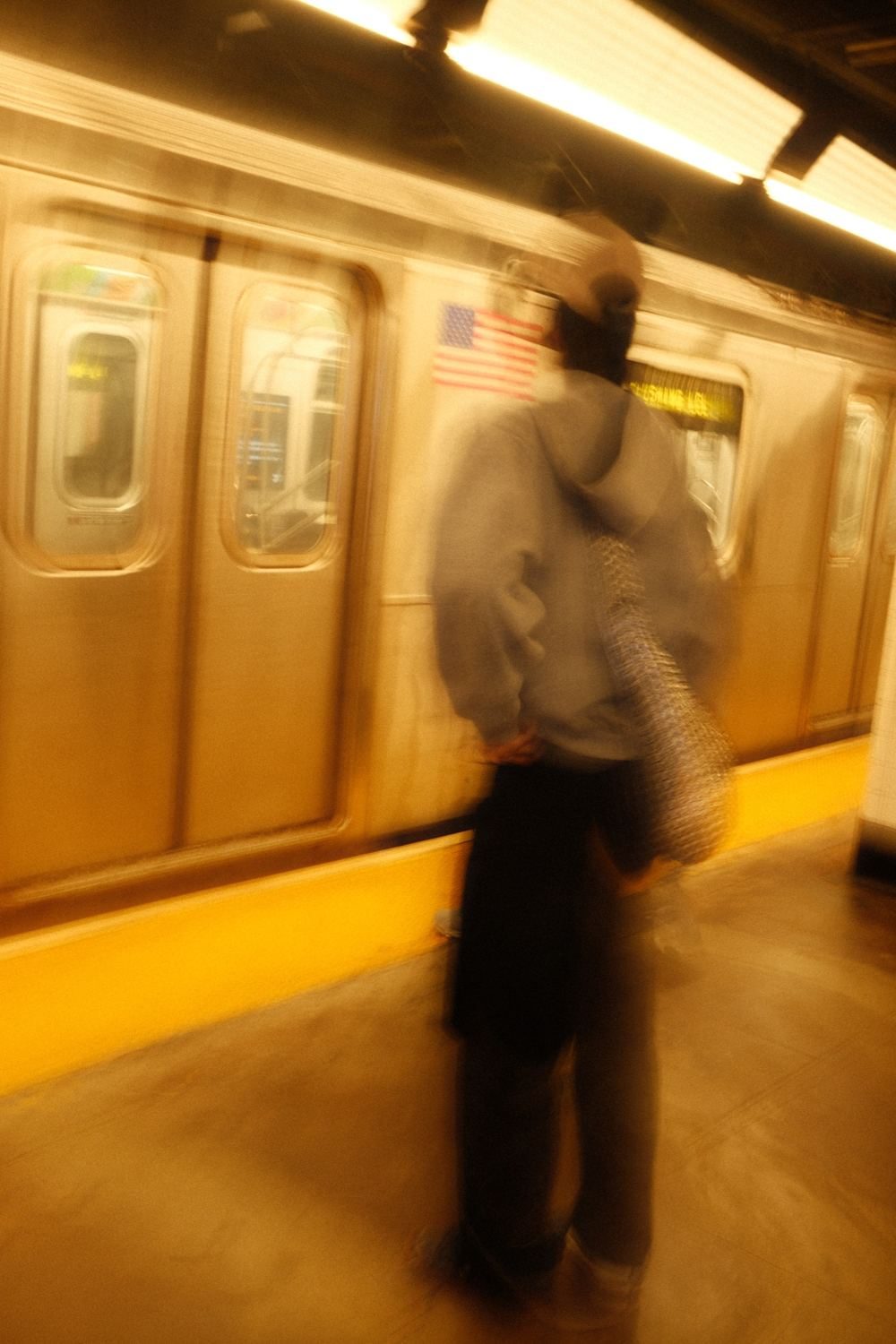
いえ、全然。大学はシカゴのほうで、ニューヨークからはすごく遠いんです。留学生は卒業したら、仕事がないとアメリカに残れない。どうしようかと思っていたときに、たまたま日本人アーティストのアシスタントの仕事を得られたんです。
その方のスタジオがニューヨークにあって。もう突撃で「入れてください」と言ったら、面白がって拾ってくれた。それでシカゴから引っ越しました。家族も知り合いもいない、一人でのスタートです。
No, not at all. My university was near Chicago, which is very far from New York. International students can't stay in the U.S. after graduating without a job. While I was wondering what to do, I happened to get a job as an assistant to a Japanese artist.
The artist's studio was in New York. I just charged in and said, “Please take me in,” and they found it funny and took me on. So I moved from Chicago. I started alone, with no family or acquaintances.
今もアシスタントを続けながら?Are you still working as an assistant?
いえ、3年ほど働いて、去年の春に辞めました。自分でアーティストビザを取ったのが去年の春から夏にかけて。独立してまだ一年ちょっとです。
No. I worked there for about three years and quit last spring. I got my own artist visa between last spring and summer. I've only been independent for a little over a year.
大きな作品もありますが、1点仕上げるのにどれくらいかかるんですか?Some of your works are large. How long does a single piece take to finish?
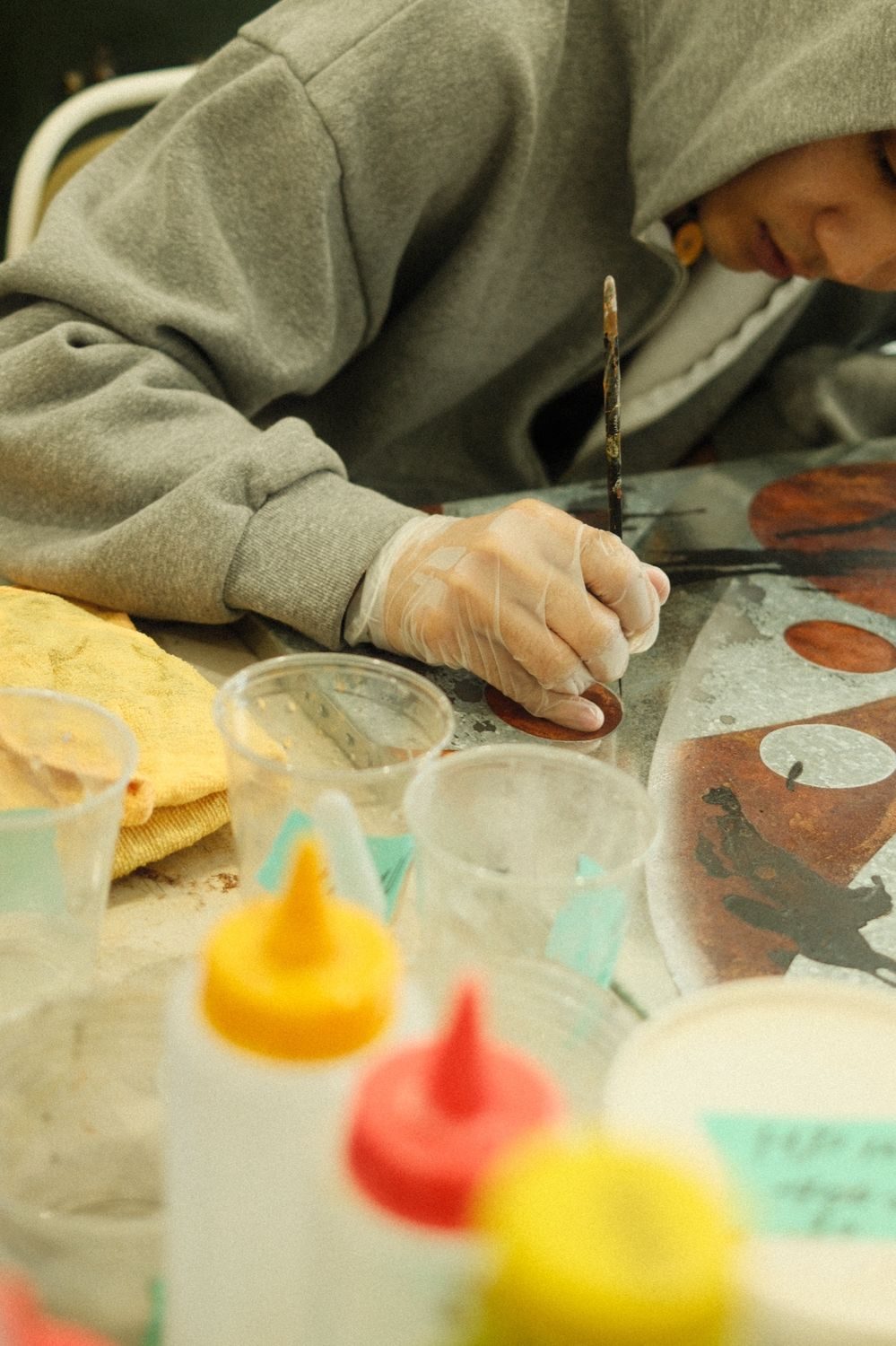
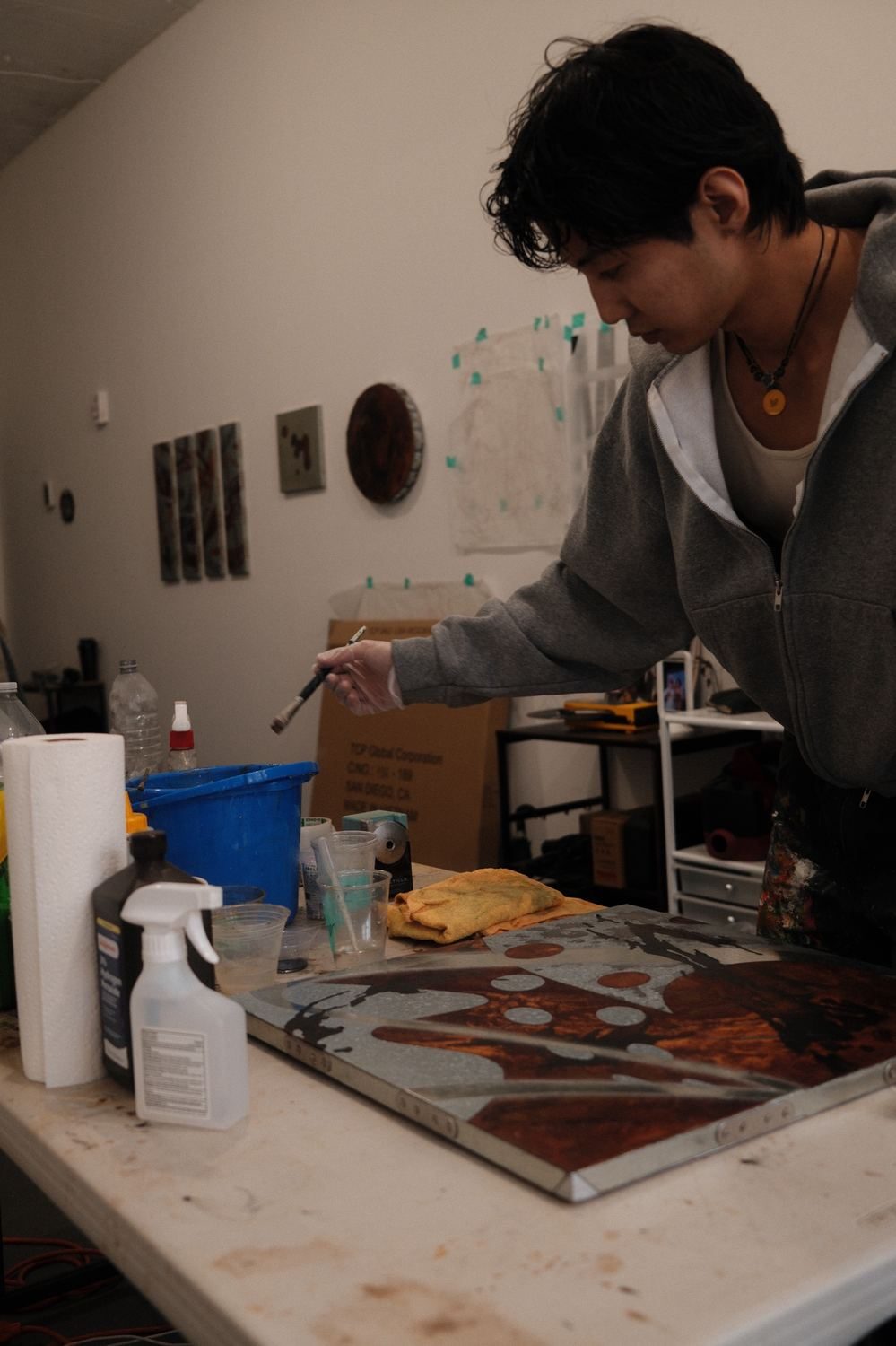
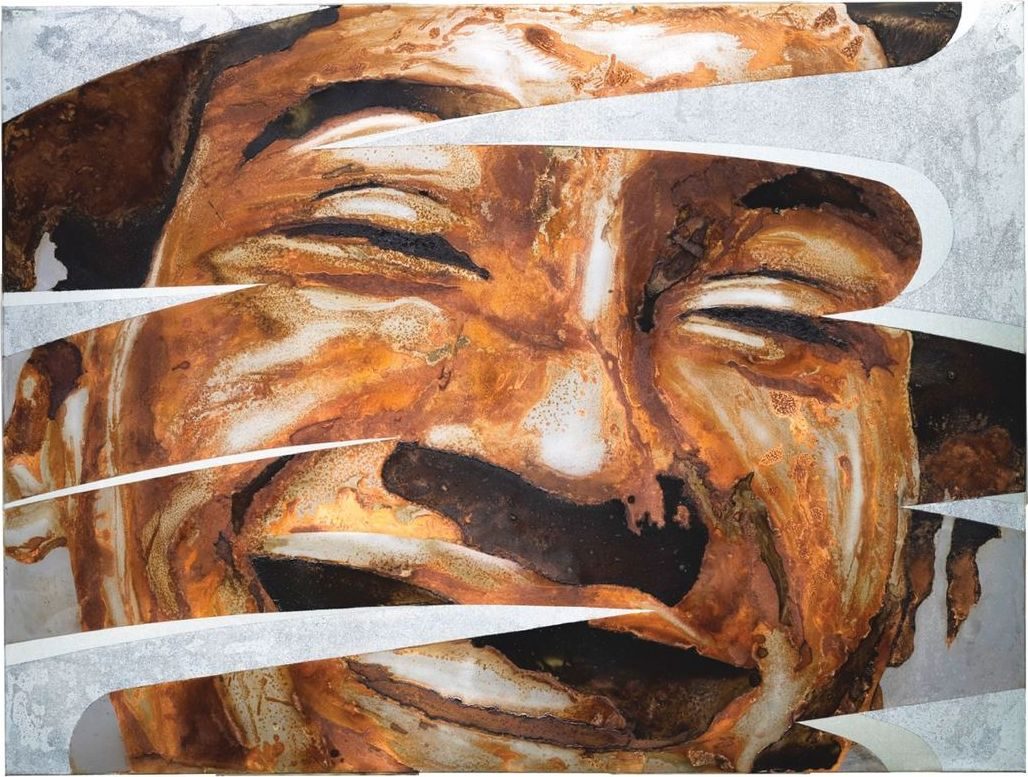
錆の平面作品は、じつは時間をかけられない素材なんです。放っておくと、色がどんどん暗くなっていく。錆の明るいオレンジを残そうと思うと、時間との勝負です。サイズにもよりますが、大きいものでも、長くて1か月ほど。他の作家さんと比べても、かなり早いほうだと思います。
Flat rust works are, in fact, a material you can't take your time with. If left alone, the color keeps getting darker. If I want to keep rust's bright orange, it's a race against time. It depends on size, but even the large ones take a month at most. I think that's quite fast compared with other artists.
技法そのものが、スピードを求めてくる。The technique itself demands speed.
最後にフィニッシュのコーティングを吹き付けるんですが、それをしないと錆の進行が止まらない。だから、描いている間も「色が変わってきちゃってるな、そろそろ終わらせないと」と思いながら、ずっと追われている感覚です。偶然に助けられるような、ラッキーパンチもけっこうあります。
At the end I spray on a finishing coat, and without it the rust never stops progressing. So even while I'm painting, I'm thinking, “The color is already changing, I need to wrap this up soon,” and I feel constantly chased. There are quite a few lucky punches too, where chance comes to my rescue.
完成後も、作品の色は変わっていくんですか?Does the color of a work keep changing after it's finished?
いえ、コーティングで一度止めたらもう大丈夫です。展示されているのは、すべてコーティングを終えた状態です。追われるのは、そこまでの時間だけ。
No. Once I stop it with the coating, it's fine. Everything on display is in its post-coating state. The only time I'm chased is until that point.
進み続ける時間の一瞬を、画面に閉じ込める。 Capturing a moment of ever-moving time on the canvas.
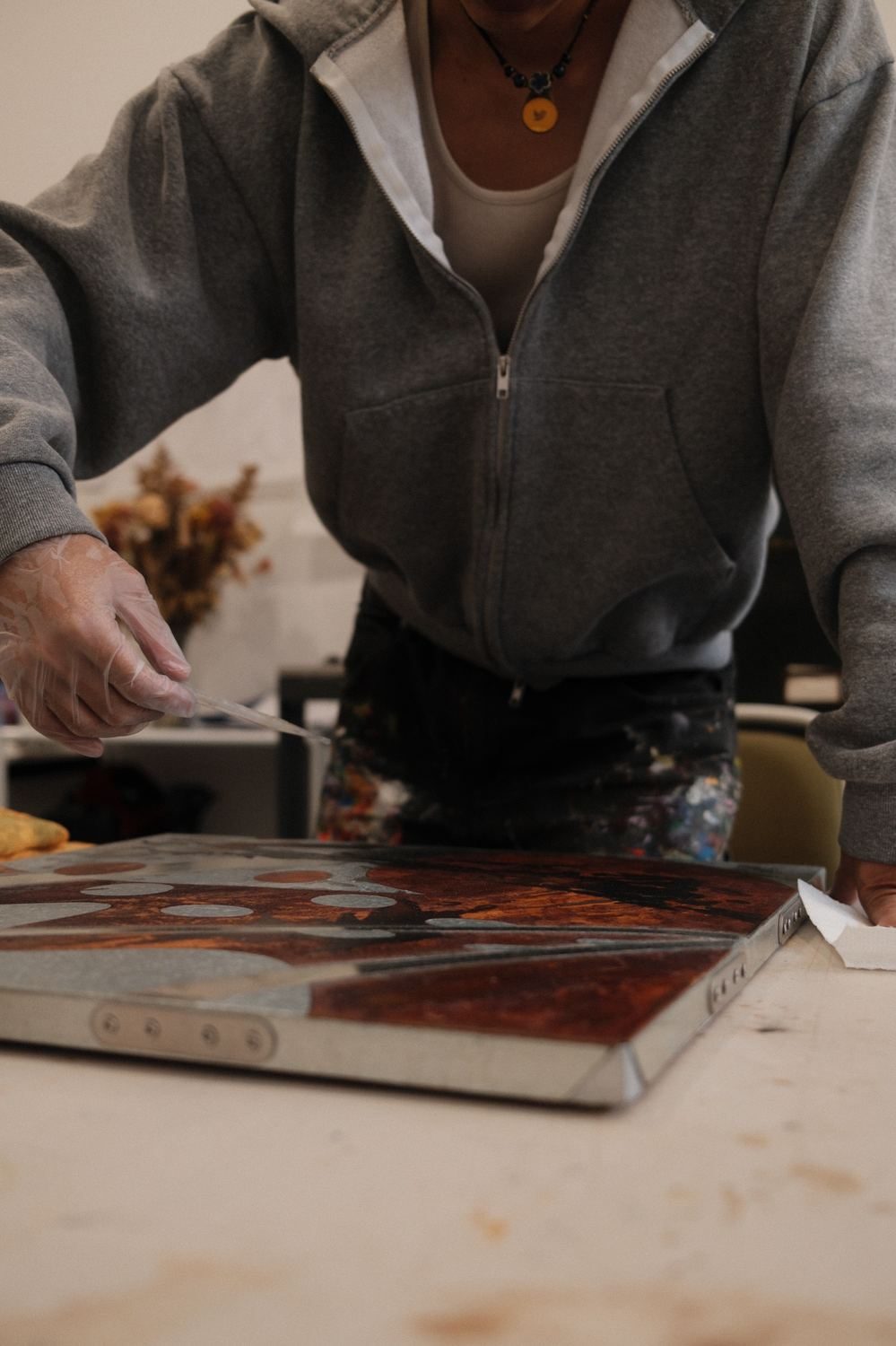
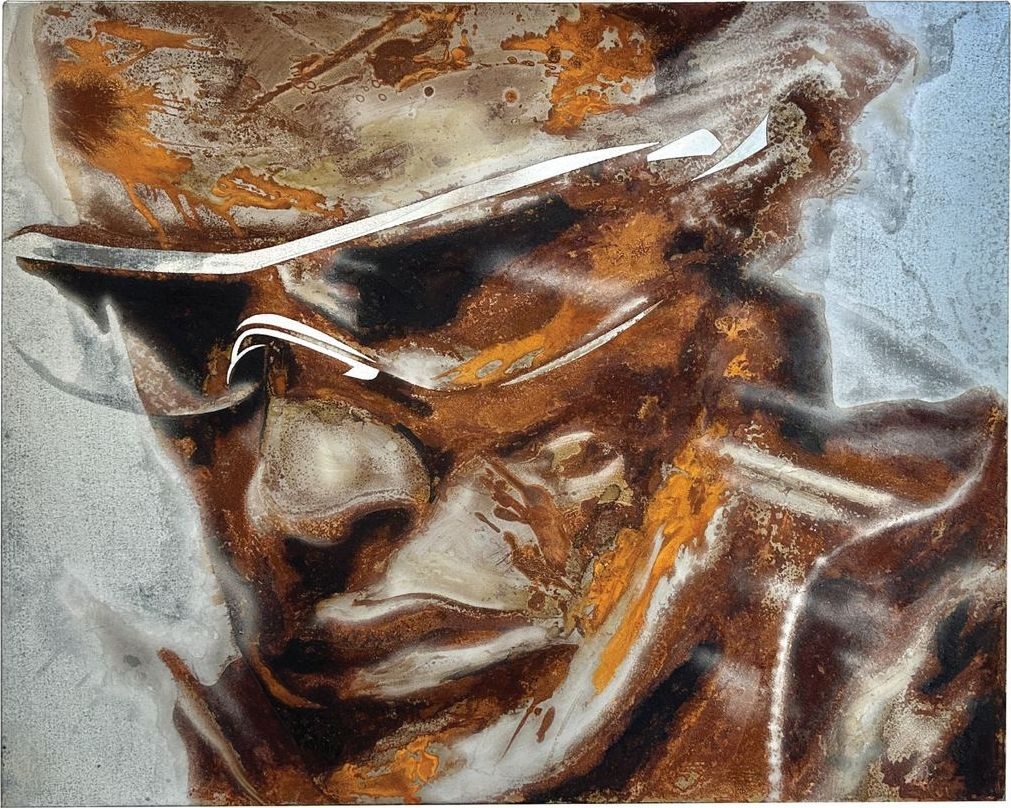
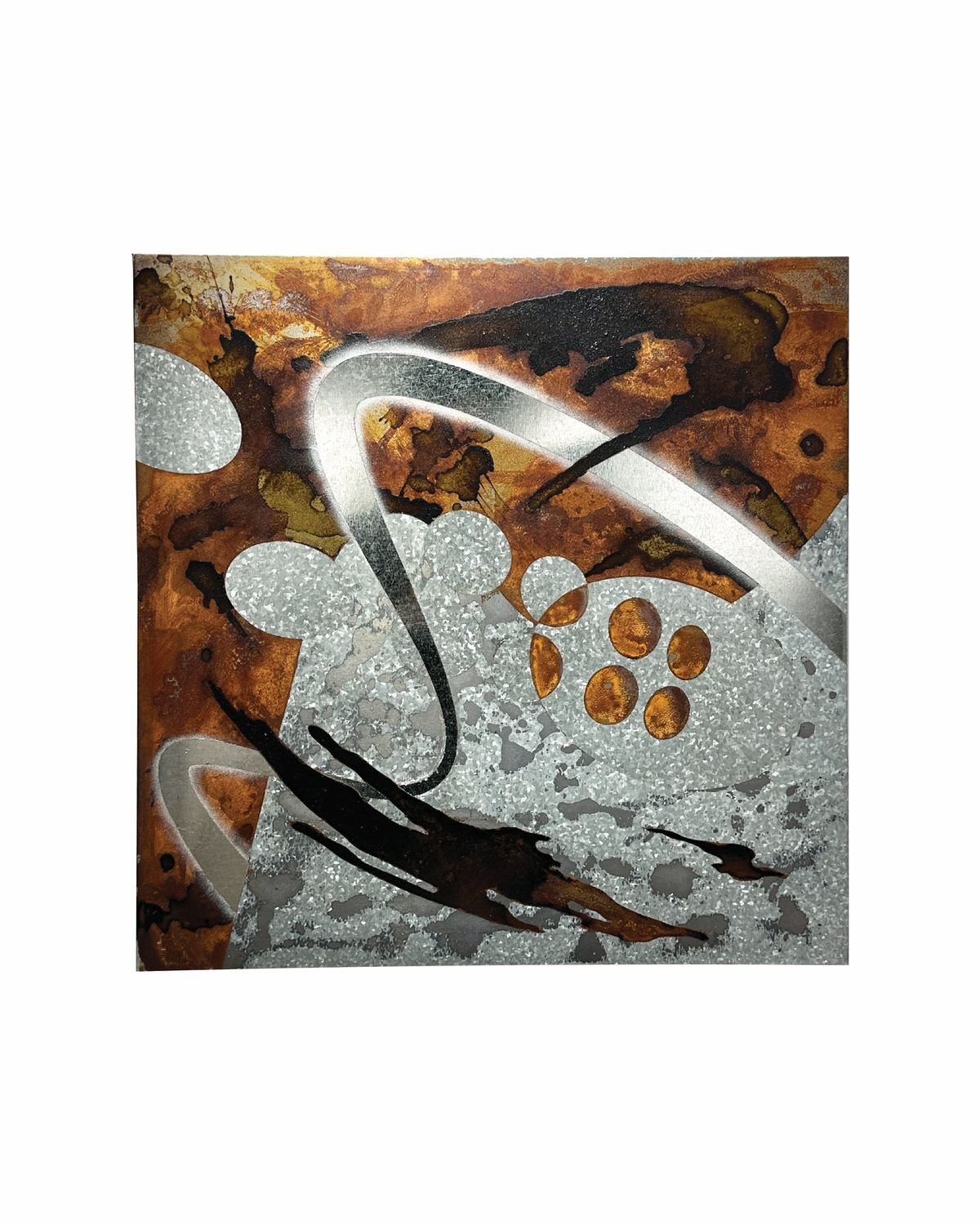
平面と立体、どちらも制作しています。アイデアを形にするときは?You make both flat works and sculpture. How do you turn an idea into form?
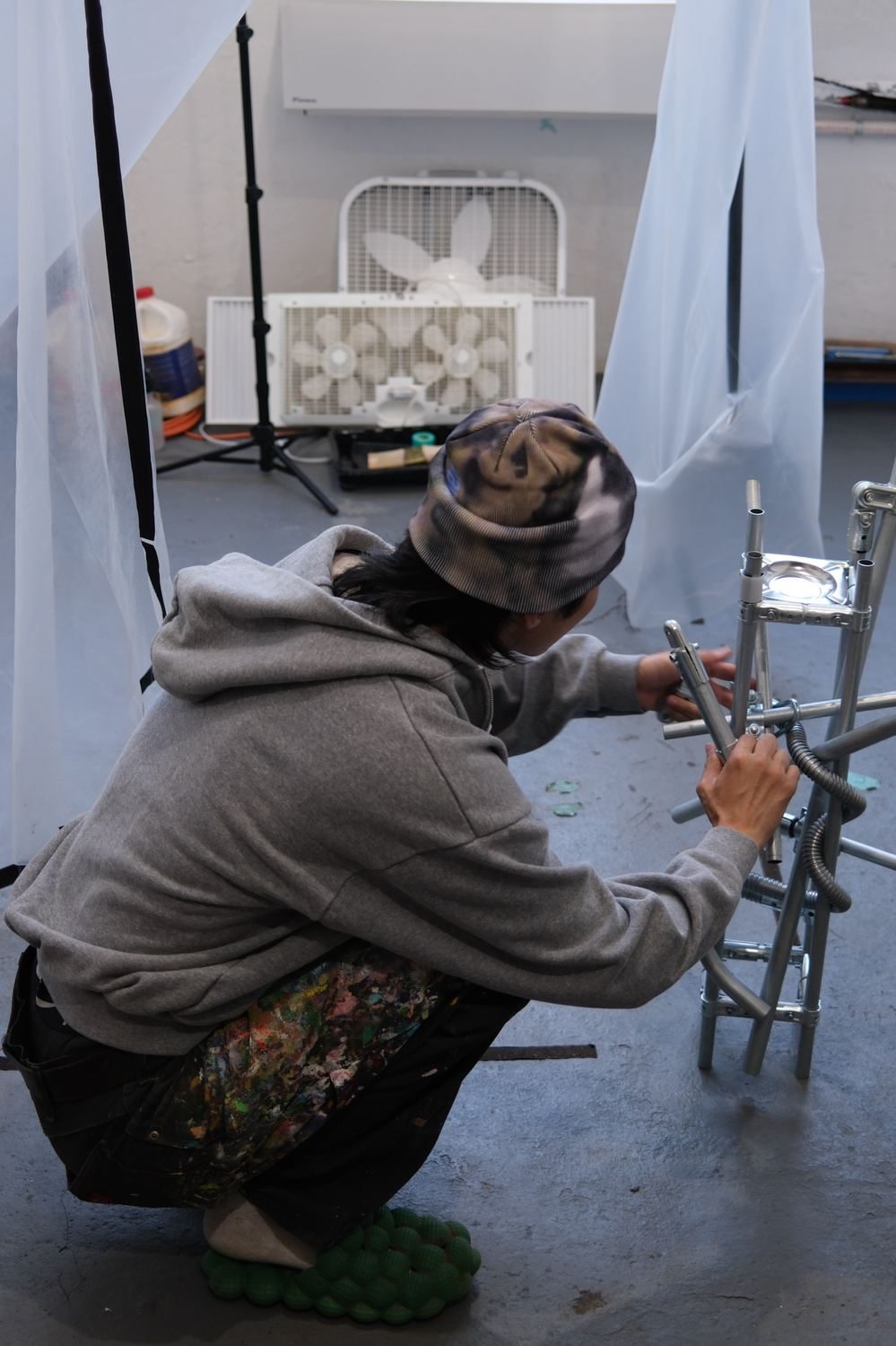
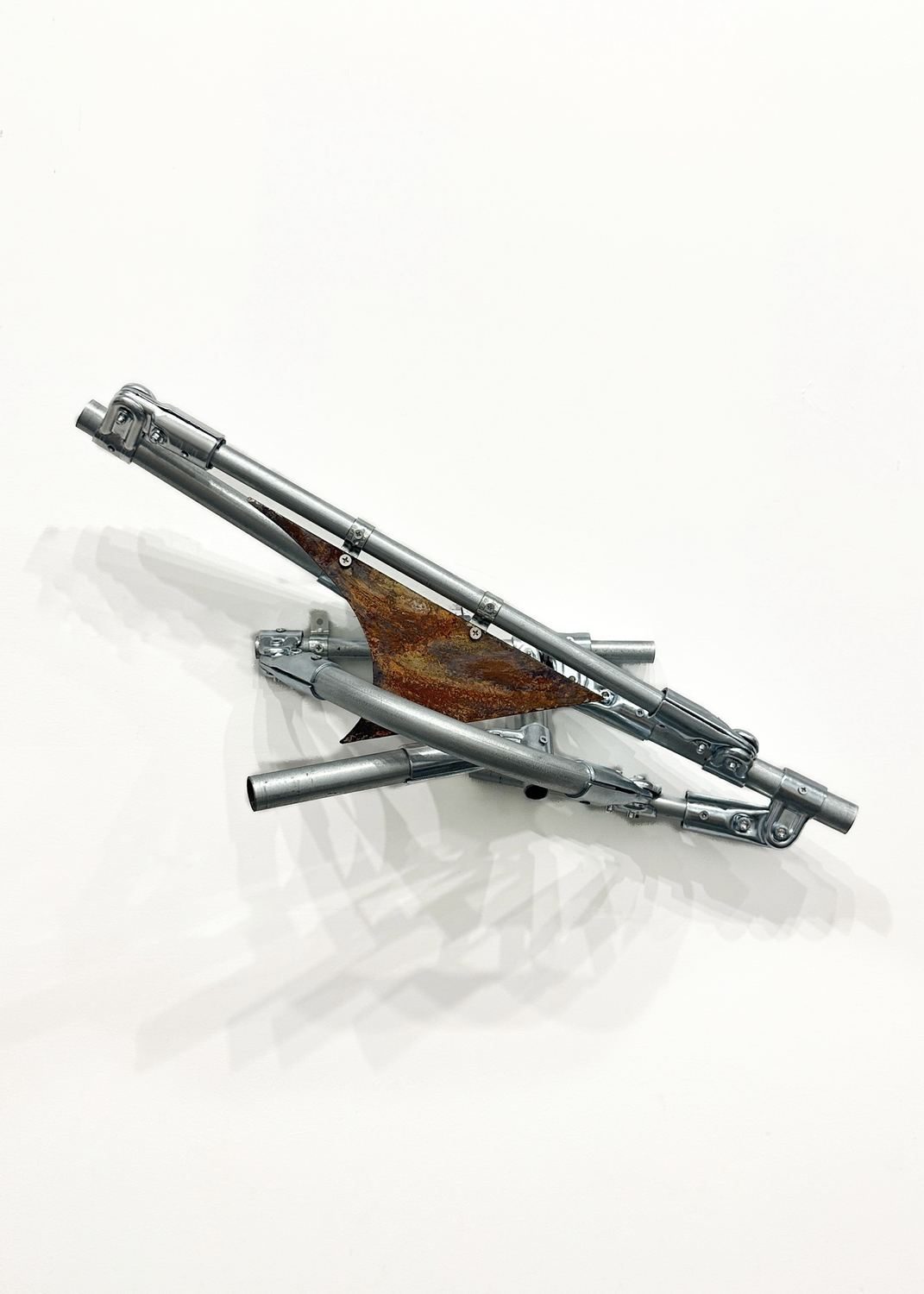
立体は、ノープランでライブ感のまま組むことが多いです。「こっちは長いほうがいいな」とか言いながら。最近はアプローチを少し変えて、平面でもなんとなくデザインしてから始めたりもしています。どちらも好きです。
デザインもリファレンスもなく組むのは、すごくピュアな感じがするんです。好きな色が人それぞれ違うように、「かっこいい」と感じる形も人それぞれ絶対にある。それだけを意識して組むときは、純度がすごく高い。
With sculpture, I often assemble with no plan, going by the live feel—saying things like, “this one should be longer.” Recently I've changed my approach a little, and even for flat works I sometimes sketch out a rough design first. I like both.
Building without a design or reference feels very pure. Just as everyone has different favorite colors, everyone surely has their own shapes that feel “cool.” When I build with only that in mind, the purity is very high.
アート以外で、作品に影響を与えているものは?Apart from art, what influences your work?
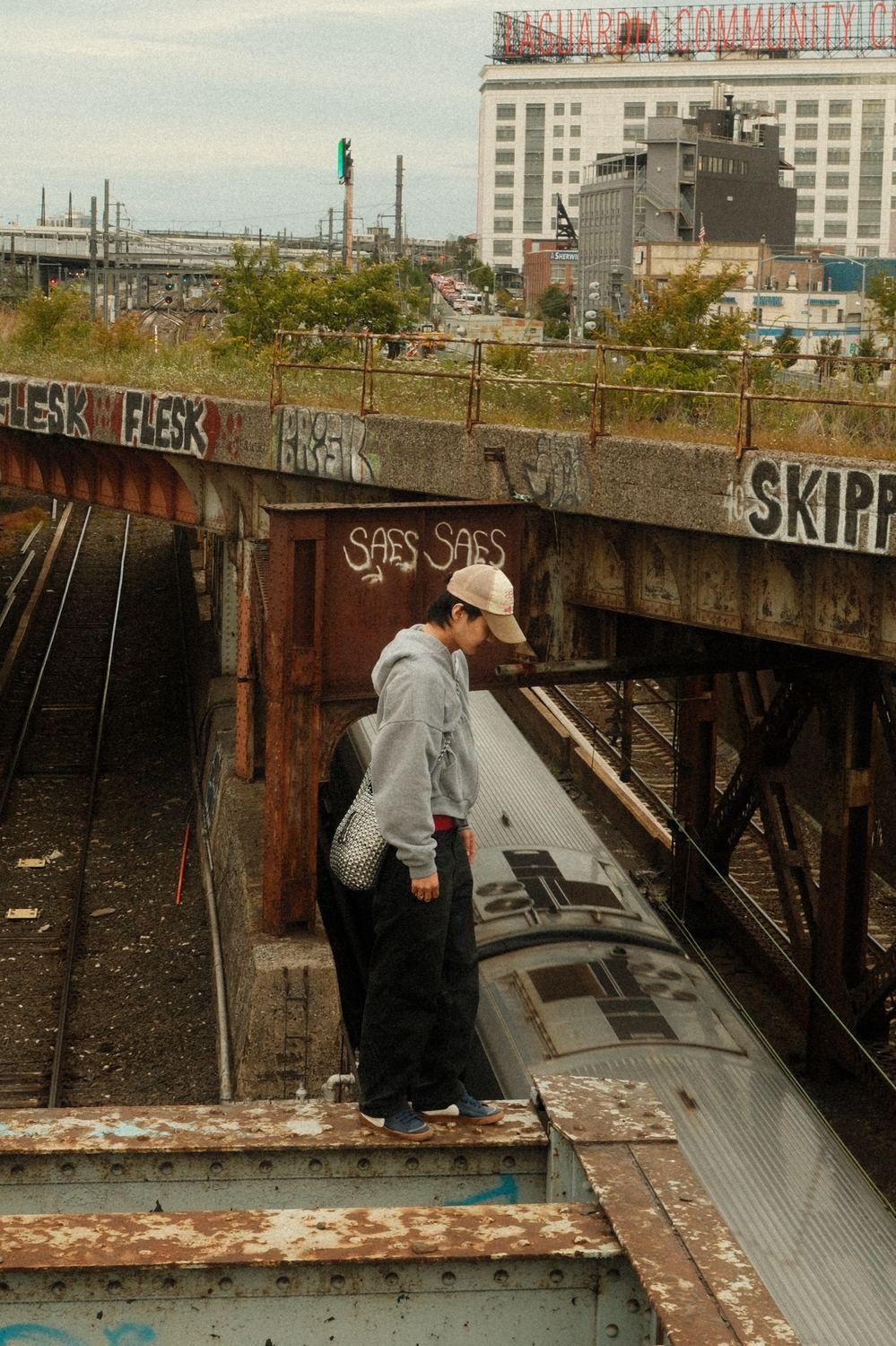
人工物ですね。錆を使っているからというのもありますが、工場のような、朽ちていく人工物が好きなんです。今のスタジオも工場地帯のような場所にあって、よく散歩します。
散歩していると、意図していないところに自分だけに見える形がある。たまたま手前に車が止まっていて、その重なりで生まれる形とか。そういうものを写真に撮って貯めて、自分のインスピレーションボードのようにしています。
Man-made objects. Partly because I use rust, but I love decaying artificial things, like factories. My studio is also in a factory-district kind of area, and I often go for walks.
When I walk, I find shapes that only I can see in unintended places—like a shape formed by a car happening to be parked in front, overlapping with what's behind it. I take photos of those and save them, like my own inspiration board.
展示では、テーマを決めてから作品を作るんですか?For exhibitions, do you decide on a theme before making the work?
どちらもやったことがあります。ただ、その時期に自分が受けている影響は、自然と作品の共通項になる。だから昔の作品はあまり混ぜず、最近作ったものを集めて出します。今はテーマを先に決めるより、できあがったものを俯瞰して「こういうことかもな」と見つけるほうが多いです。
I've done both. But the influences I'm under at a given time naturally become the common thread of the work. So I don't mix in older pieces much; I gather recent ones to show. These days, rather than deciding the theme first, I more often look over what's finished and discover, “maybe this is what it's about.”
アートを始めたのがアメリカだったこともあり、日本の友人は高校までの、アートとは関係のない仲間がほとんどだという。だからこそ、展示を見た人とつながれることが「めちゃくちゃ嬉しい」と彼は話す。ニューヨークで出会った日本人クリエイターを通じて、日本での輪も少しずつ広がりつつある。
雑誌という形で日本のフィジカルな誌面に登場するのは、今回が初めてかもしれないという。錆が進む速さと競いながら、彼は自分にしか描けない時間を画面に残し続けている。その作品を、東京でもっと見てみたい。
Profile
鈴木勁(すずき・つよし)
1998年、東京都出身。2021年にイースタンイリノイ大学スタジオアート学科を卒業後、ニューヨークへ移住。錆を用いた独自の技法で、時間や記憶をテーマに作品を展開する。人物画を軸に制作を続ける一方、近年は抽象画や立体作品にも取り組む。ニューヨークを拠点に、日本国内でも作品を発表している。
Instagram: @244rust
Photo: Nick van Osdol. Instagram: @nickvanosdol